

Sleeping in Public Places. What's It Like?
Parking lots. Alley ways. Breweries. Is it all it's cracked up to be?

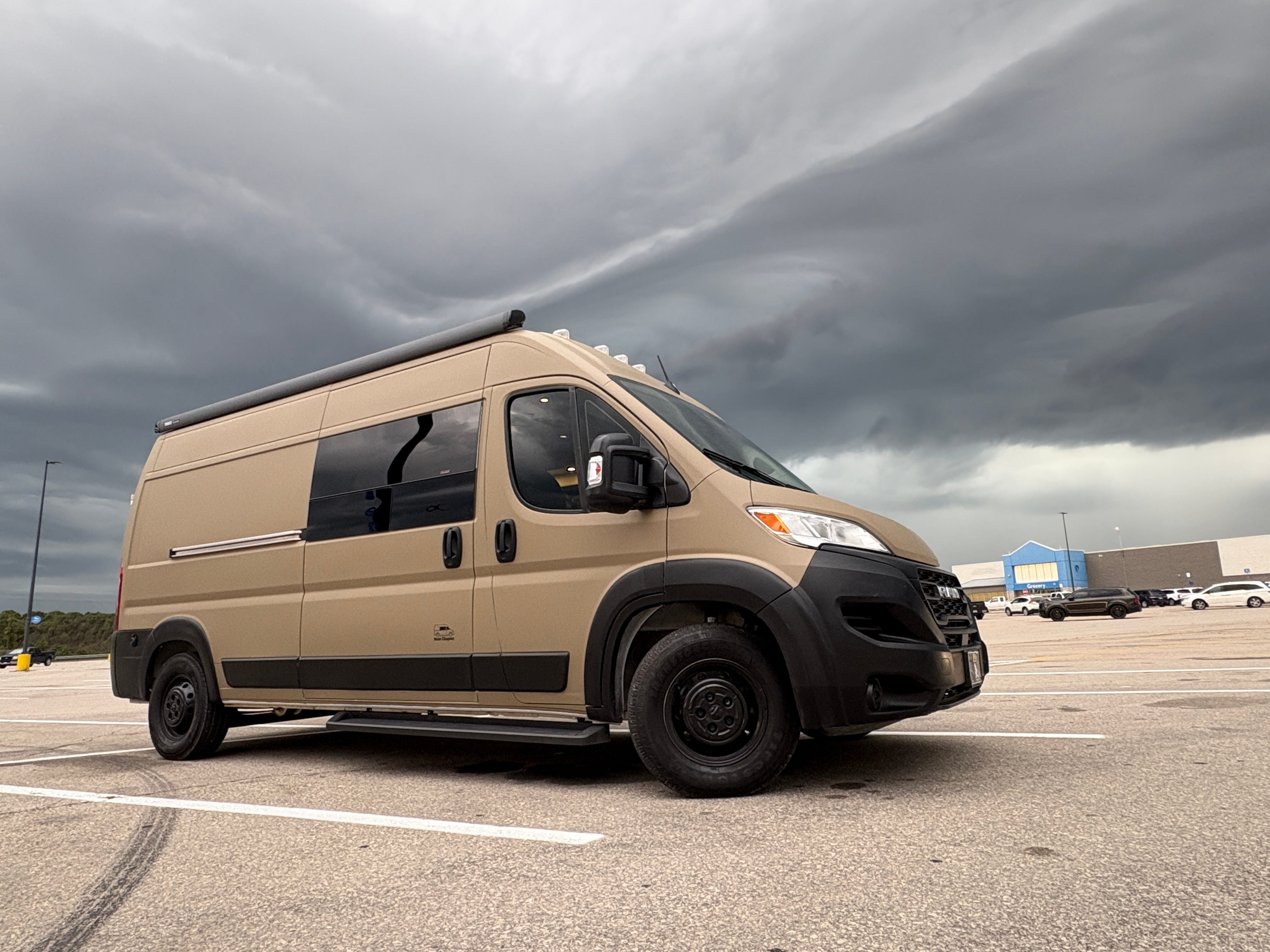
This summer we did something I never thought we’d do.
We slept in a Walmart parking lot.
This was not my first choice because it just felt weird, like we were some sort of vagrants or modern day hippies with limited options, which in reality isn’t entirely untrue, because when you’re living on a very tight and limited budget, there’s not always enough money to spend on RV parks or campgrounds. Especially when they start charging way more than it’s worth for a piece of grass! Therefore, you have to compromise.
So there I was, at the Walmart in Cody, Wyoming, asking the employees if people were allowed to sleep in the parking lot at night. Each location and every town has its own set of rules and in some places you can be given a ticket or arrested! I had no interest in getting a knock on our van at 3 a.m. by the police and handcuffed naked.
Thankfully, they said yes.
We were told to find a spot on the side next to the garden center and eventually we were joined by probably a dozen RVs and campers. I was still apprehensive, but since there were others living the dream alongside us, it felt a little safer to park, make dinner, and hang out for the night. I had no clue how it would go, but beggars can’t be choosers. This was it.
The next morning I woke up feeling happy and refreshed, and aside from hearing a couple of generators, the night was peaceful and uneventful.
Sleeping at Walmart no longer felt strange but liberating.
As crazy as it sounds, sleeping in a public space wasn’t as bad as I made it out to be in my mind, and the idea that we could camp in a variety of spots for free - with permission - became a new and exciting chapter in our book.
We have now stayed at several Walmarts, a LOVES station, hotel parking lots, a Bass Pro Shop, highway rest stops, and even an alleyway behind a VFW. More than that, we’ve also slept at privately owned but public spaces including breweries, distilleries, museums, farms, churches, and even along the highways and in the mountains on dispersed land.
Doing so has saved us hundreds of dollars every month!
While it’s been a good experience and no longer weird to sleep in parking lots, there's something else on my mind about this kind of lifestyle.
. . . 🚐 . . .
Because so many people can't afford housing, they're forced to live in vehicles to survive, and as a byproduct, more people are sleeping in public places. This, in turn, has caused local and state authorities to implement strict laws that prohibit them from doing so—resulting in steep fines, arrests, and in states like Tennessee, even felony charges!
I feel like this discussion is an entirely separate post, but it’s crazy to think people could be treated as criminals for sleeping in their vehicles.
And it’s not just public areas like parks or streets either. We’ve stayed in cities where it’s illegal to sleep in parking lots owned by private businesses, including Bass Pro Shop, Cabela’s, Cracker Barrel, and Walmart - all of which often allow travelers this opportunity.
Some of these local ordinances are understandable given the sheer number of homeless encampments and drug activities taking over cities and towns, but some of these laws extend far beyond endangerment.
That said, different considerations should be given to those of us living in vehicles who do so responsibly and peacefully in public places.
. . . 🚐 . . .
Overall, I really have liked the freedom we have to park almost anywhere to work, eat, and sleep, particularly when it’s free!
Camping out in public places is a viable option for those of us who travel full-time and operate on limited funds. It’s not as bad as you might think, and more often than not, I’ve felt safer in these spots than in a deserted, paid-for campground.
I hope cities and states will reconsider their laws, keeping in mind that even though we might be houseless, we’re not all necessarily homeless, nor are we always the same people who created the problems for these ordinances. Knowing this makes a difference.
As digital nomads, we appreciate a free stay, but that doesn’t mean we don’t spend money in their communities. We just choose to invest it wisely.
Finally, for those of you who also choose to sleep in public spaces or might be considering it: Please help keep it available for all of us by doing things right!
Clean up after yourselves.
Obey the posted laws.
Respect the people around you.
Ask for permission.
Be a gracious visitor.
Because people are always watching. You can either help the situation or totally ruin it.
Remember that the freedom we have to stay in places for free is a privilege, not an expectation.
We hope to see you at Cracker Barrel!
☕️ Will Work for Coffee!
We don’t charge a subscription fee for our newsletter, but if you love what we’re about, please consider buying us a drink. This really helps support what we do.
The bit about Tennessee making a felony arrest for an overnight stay is a bit misleading. There are specific requirements before that will happen, the most relevant is 24-hour notice to the camper.
I lived for four years in my Prius and never had a negative experience with law enforcement. Most of my stays were 14-days at a time in Forest Service dispersed camping areas; on occasion I had to pay for camping at a KOA or other privately owned campground, whilst on my way to a destination.
As always, knowing the rules before one stays anywhere is essential for safe, legal parking.
Part of the issue may be that cities and towns have a difficult time determining who is houseless and choosing to live in their vehicle, and who is homeless and has to live in their vehicle. Or possibly they don't have the manpower to adequately enforce, not enforce any kind of rules for their community. So the answer unfortunately is to make it illegal all together. There's always going to be people who choose to live in their vehicle but think the rules don't apply to them, and people who have to live in their vehicle who obey all the rules and are good stewards in the community that they are staying. Sadly, I think it's only going to get worse given the state of the economy, housing availability and cost, and so many other factors. There are no easy answers and if you are choosing to be houseless be aware of the laws in each community, and maybe even if you have the means lend a hand to the others less fortunate than you.