


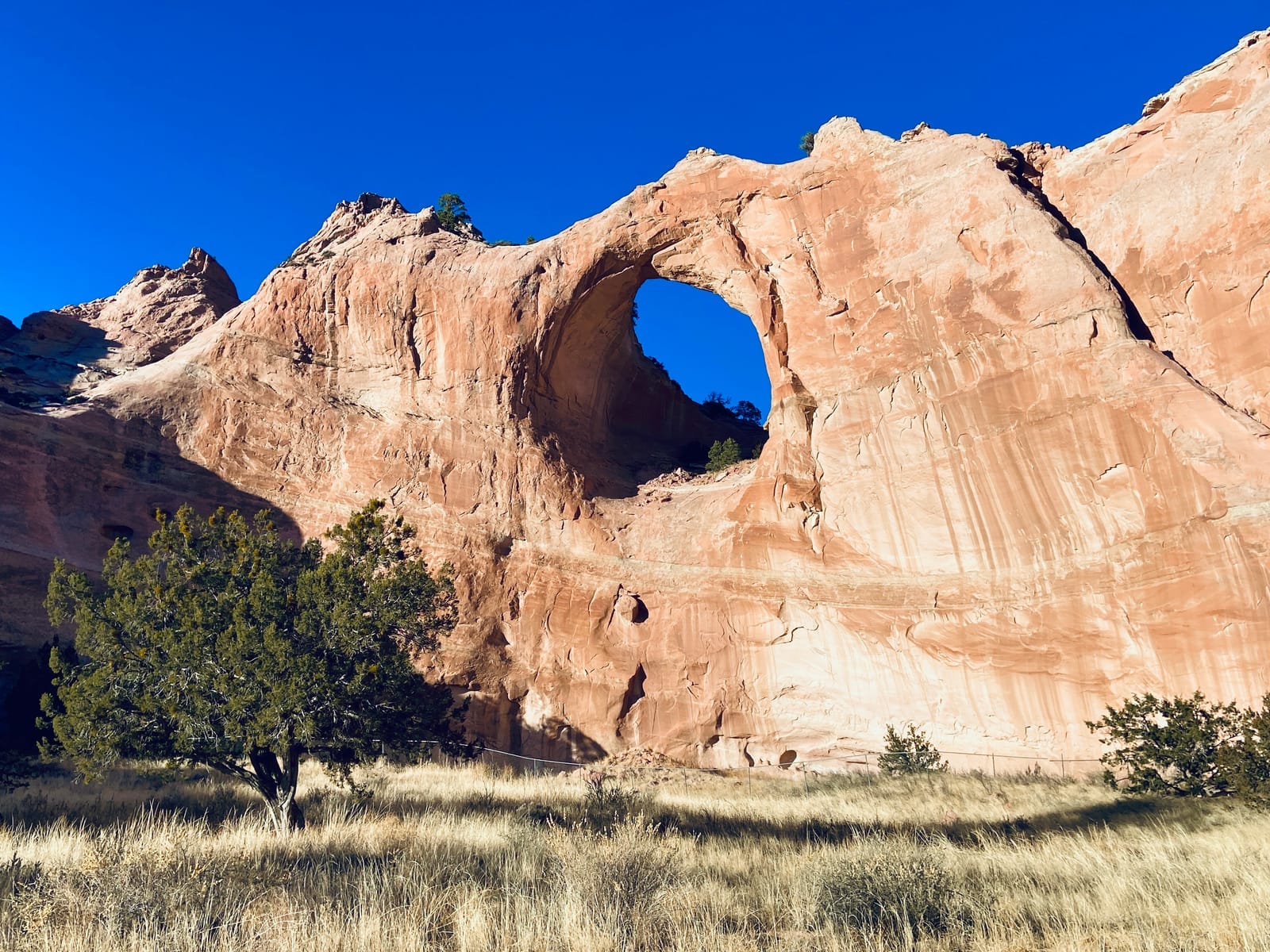
Back in January, we decided to explore a new route on our journey from Sedona, Arizona, to Pagosa Springs, Colorado.
Since we hate driving the interstates, we did a quick internet search for backroads and discovered a place called Window Rock (Tségháhoodzání), located along Highway 246 in Arizona. It is the largest Diné reservation1 in the United States and serves as the capital for the Navajo Nation.
To be honest, I was hesitant to take this route.
The Navajo Nation has stringent rules on non-natives entering its land and recreational areas, which also require permits. Not to mention, we’ve seen numerous warnings for non-natives at Navajo stops along I-40 since we started traveling in 2020, urging tourists to stick to gas stations and fast-food restaurants only.
We certainly didn’t want to disrespect their laws or culture, nor did we want to contribute to more problems the white people have already brought to this nation, so I was unsure how we’d be received, or whether we’d even be allowed to drive there.
After doing more research, we found that our visit would be fine as long as we followed these rules and guidelines. So, we headed toward Highway 246.
The drive toward Window Rock was amazing.
Filled with red rock mountain landscapes and vast open ranges, it didn’t take long for my apprehension to give way to peace. We enjoyed the incredible scenery and the road less traveled, rarely seeing another vehicle along the way.
As we arrived in Window Rock, we checked into our hotel.
This Quality Inn was one of the nicest properties of its brand we’ve stayed in. It was clean, the room was spacious and pleasant, and the staff was welcoming and friendly. Despite the restaurant undergoing renovations, our breakfast was fantastic!
After that, our first stop was the Navajo Nation Museum and Library, conveniently located just steps from the hotel.
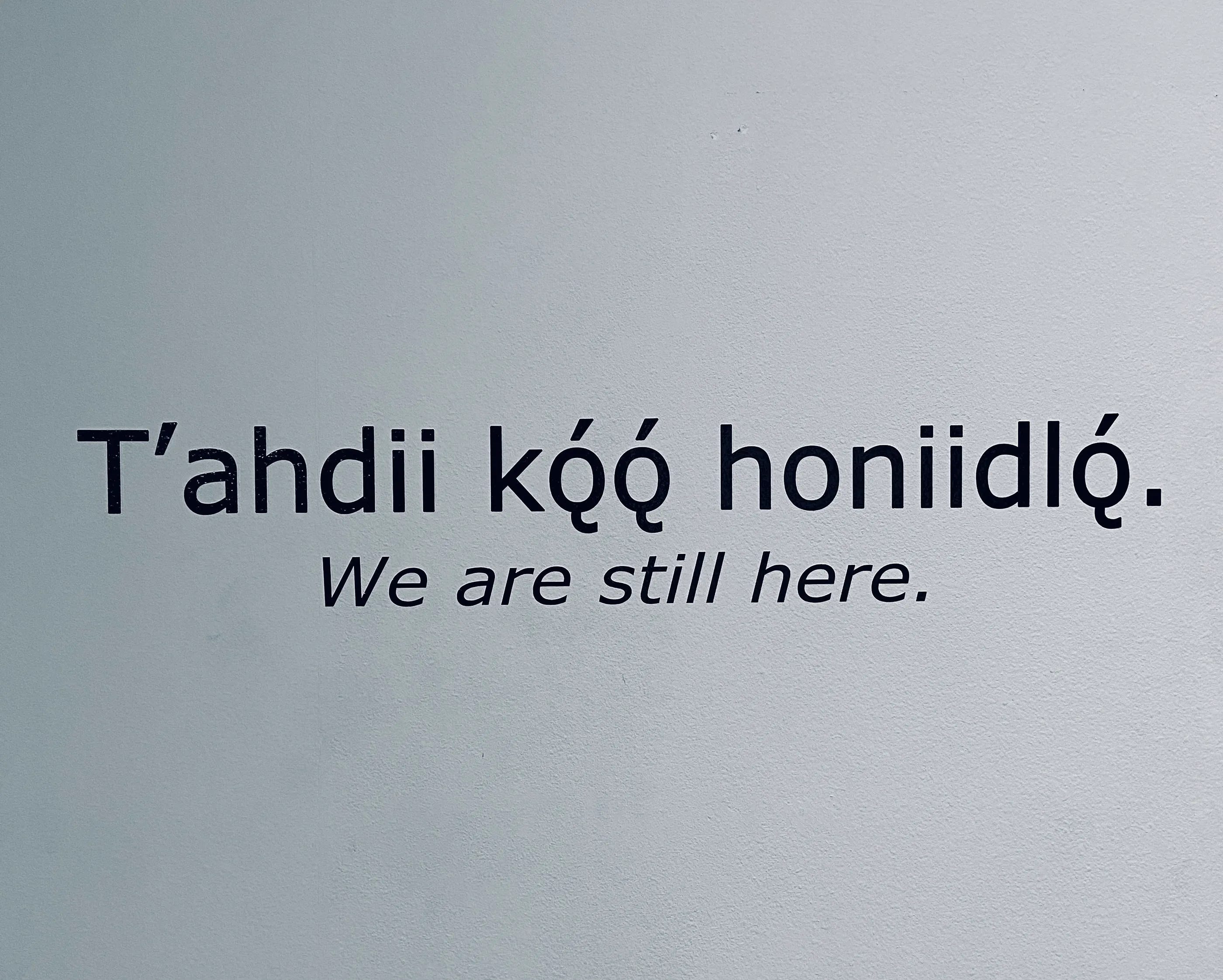
Navajo Nation Museum
This beautiful building functions as a versatile event center. It includes a museum, library, snack bar, gift shop, information center, and several offices. It also features an outdoor amphitheater and an authentic Navajo Hogan.
As we entered the museum, I felt an overwhelming sadness.
Having worked with several Native American tribes in the past and having read several books about the Navajo Code Talkers, I knew the horrors of what these people endured historically, especially the Navajo Nation.
If you do not know this history or have never heard of The Long Walk, this summary from the National Museum of the American Indian captures it.2
Major General James H. Carleton ordered Christopher (Kit) Carson to defeat the Navajo resistance by conducting a scorched-earth campaign across the Navajo homelands. Carson burned villages, slaughtered livestock, and destroyed water sources to reduce the Diné to starvation and desperation.
With few choices, thousands of Navajo surrendered and were forced to march between 250 and 450 miles to the Bosque Redondo Reservation. While intended to be a reservation, Bosque Redondo functioned as an internment camp. The U.S. stationed soldiers there to make sure that the Diné could not leave.
From the beginning, the plan was to force the Navajo to adopt white American cultural values; however, many Navajo resisted cultural assimilation and would continue the fight until they were allowed to return to their homelands.
Sadly, this is just one of many dark and disturbing moments in the history of our country, when an entire nation of Indigenous people was almost wiped out because of the color of their skin, language, and way of life.
The museum lays bare these facts and atrocities, and I cannot, in good conscience, write this article without sharing this critical information. We cannot ignore this history, nor should we ever allow such things to happen again.
The Navajo people also include a heartfelt and inspiring gallery from different artists depicting Native American culture and life, including the introduction of alcohol into their society and the monstrous damage it caused to their nation. It was a mixture of celebration and challenges.
We also saw essential artifacts, including the sole copy of the 1868 Navajo Treaty and several items belonging to the Navajo Code Talkers.


Navajo Tribal Park and Veterans Memorial
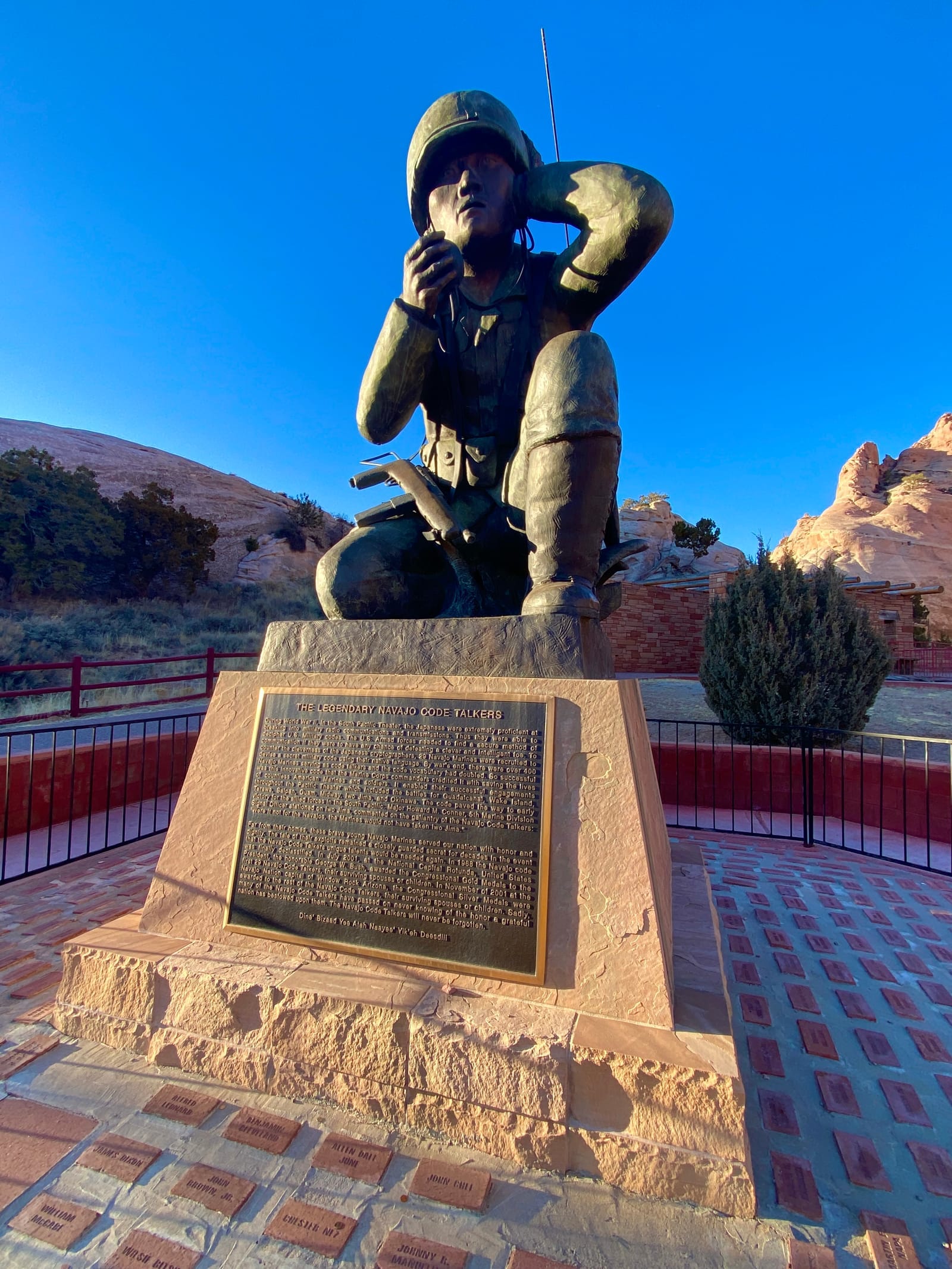
Our second stop was to see Window Rock itself and honor the Navajo Military Veterans who served our country.
This small park is located near the Navajo Nation headquarters and administrative offices and is stunning to see! Because of its cultural significance, you are not allowed to get up close to the rock formation or climb it, but it is worth it, even just from a short distance.
Additionally, the Veterans Memorial, established in 1995, honors many Navajo Code Talkers, whose native Diné language was used to develop unbreakable codes in World War II and was crucial to our victory. The names of Navajo war veterans are also featured within this park.


J.L. Hubbell Trading Post
The next day, as we left Window Rock and headed west toward Highway 191, we discovered an original trading post for the Navajo people and new settlers.
The J.L. Hubbell Trading Post is a historic site dating back to 1874. John Lorenzo Hubbell purchased it in 1878, and it was sold to the National Park Service in 1967.
Stopping here was a true delight. It houses many historical artifacts, still has original buildings, and is one of the last operational trading posts in this country. You can purchase authentic Navajo rugs and artwork, camping supplies, and even cans of SPAM.
Plus, you can get chased by the chickens and see the sheep for a bonus.


Canyon de Chelly National Monument
Our last stop in the Navajo Nation would be something spectacular!
Canyon de Chelly was an epic adventure despite the howling, frigid winds we endured on the day of our visit. The views along the drive and at the stopping points are simply indescribable; you have to see them to believe them.
The canyon is home to many Diné people who raise livestock and continue to live here as they did 5,000 years ago. As we hiked along one of the viewing areas, we met a 75-year-old man who owned some of the land below. He shared stories of growing up there, of waiting for the floodwaters to recede before he could get home. Despite his age, he walked much faster than we could.
As we made our way to the end of the canyon and back, we remained mesmerized by the enormity of this place and the beauty it held.
Before we left the park, we ran into a Navajo couple whose car was somehow stuck in a ditch. Despite my mother’s warnings to never stop and help people because they might carjack us, I wasn't about to leave them stranded there.
After we freed the vehicle from the deep sand, the young man thanked me, prayed for me in his native language, and told me I was the only white person who had ever helped him. I replied that I was simply a Native American trapped in a vanilla body who hated Kit Carson. He burst out laughing, then gave me a manly hug.
I don’t say this to give myself credit, only to remind us all to be open to helping and loving our fellow humans, no matter the color of their skin or where they come from. It was a glorious exchange I’ll never forget.


Thank you to the Navajo Nation.
Those two short days around Window Rock were very special to us, and they opened our eyes even more to a proud people and nation who, in my opinion, deserve eternal blessings and respect for what they have endured.
I am grateful for our opportunity to visit and for your hospitality.
Ahéhee’